
Voices of Mexico
Music of Mexican Composers set for Saxophone and Piano
Available on all Steaming Platforms! Physical Cd's coming soon.


Voices of Mexico
Himno Nacional Mexicano (Arr. for Soprano Sax)
Alejandra (Arr. Alto Saxophone and Piano)
Sobre las Olas (Arr. Alto Saxophone and Piano)
Júrame (Arr. Alto Saxophone and Piano)
La Llorona (Arr. for Soprano Saxophone and Piano) (En Vivo)
La Golondrina (Arr. Alto Saxophone and Piano)
Cuando Dos Almas (Arr. Alto Saxophone and Piano)
Cielito Lindo (Arr. Alto Saxophone and Piano)
Los Compositores

Maria Grever
(14 September 1885 – 15 December 1951) was the first female Mexican composer to achieve international acclaim. She is best known for the song "What A Difference A Day Makes" (originally "Cuando vuelva a tu lado"), which was popularized by Dinah Washington and has been covered by numerous artists.
Grever wrote more than 1000 songs — the majority of them boleros — and her popularity reached audiences in Latin America, Europe, and the United States. She was said to have possessed perfect pitch and wrote most of her songs in one key. Her first piece of music, a Christmas carol, was composed when she was four years old. She wrote her first song when she was 18 years old, "A Una Ola" (To a Wave), and it sold three million copies.
In 1920 she began work as a film composer for Paramount Pictures and 20th Century Fox studios. Joining ASCAP in 1935, her chief musical collaborators included Stanley Adams and Irving Caesar.
Grever once said: “I had to leave my country, and now in New York, I am interested in Jazz and Modern Rhythms, but above all, in Mexican Music, which I long to present to the American people. I am afraid they don't know much about it. It is music worth spreading; there is such a cultural richness in Mexican Music (its Hispanic and indigenous origins and how they mix) where melody and rhythm merge. It is my wish and yearning to present the native rhythms and tunes (of Mexico) from a real perspective, but with the necessary flexibility to appeal to the universal audience.
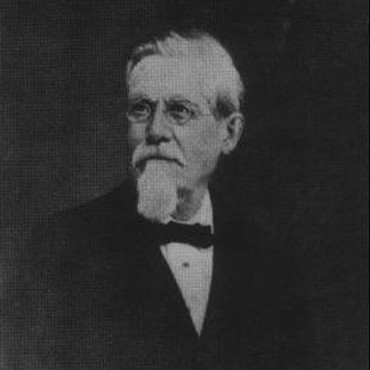
Jaime Nuno
Jaime Nunó Roca (September 8, 1824 – July 18, 1908) was a Spanish composer from Catalonia who composed the music for the Mexican national anthem.Upon Nunó's return to Barcelona, he was named director of the Queen's Regimental Band in 1851 and travelled with them to Cuba where he met and befriended Antonio López de Santa Anna, the former Mexican president.
When Santa Anna returned to Mexico in 1853 to again resume the office of president, he invited Jaime Nunó to lead the Mexican military bands. His arrival coincided with the national call to compose the Mexican National Anthem. Nunó participated, composing music for the lyrics of Mexican poet Francisco González Bocanegra, and was declared the winner on August 12, 1854. The anthem made its debut at the Santa Anna Theater, on September 15, 1854 and was performed by soprano Claudina Florentini and Lorenzo Salvi, tenor and conducted by Master Vitessiri, with the orchestra of the Great Italian Opera Company.
After the overthrow of President Santa Anna, Nunó emigrated to the U.S. and worked as a conductor and opera director, conducting the concerts of Sigismond Thalberg in New York City.One of the operas he directed toured the Americas in 1864.
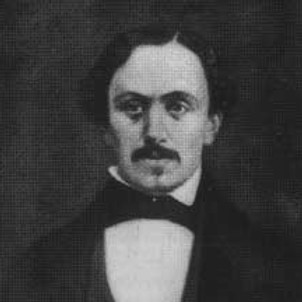
Francisco Gonzalez Bocanegra
Francisco González Bocanegra (January 8, 1824 – April 11, 1861) was a Mexican poet who wrote the lyrics of the Mexican National Anthem in 1853.
He was born in San Luis Potosí, San Luis Potosí to Spanish soldier José María González Yáñez and Francisca Bocanegra y Villalpando, sister of the Foreign Relations Secretary under President Vicente Guerrero, José María Bocanegra. Despite his father being exempted because of being married to a Mexican, in 1827, his family moved to Spain after a law was enacted expelling all remaining Spanish citizens in the country. They settled in the port of Cádizuntil the family returned to San Luis Potosí on December 28, 1836.
He died in 1861 and is buried in the Rotonda de las Personas Ilustres (Rotunda of Illustrious Persons) in Mexico City.

Juventino Rosas
José Juventino Policarpo Rosas Cadenas (25 January 1868 – 9 July 1894) was a Mexican composer, violinist, and band leader. Rosas was born into a poor Otomi family, in Santa Cruz de Galeana, Guanajuato, now renamed Santa Cruz de Juventino Rosas. In his youth he did whatever he could related to music, from ringing church bells to playing violin on the street, making music for his living from age 7 on. He used music for his ambitions to better himself, including composing a waltz in exchange for a pair of shoes.
He moved to Mexico City and soon became a well known musician and composer. At age 12 he was playing violin in one of the city's most popular dance bands. In his early teens, he worked accompanying well known singer Angela Peralta. Although he applied twice for entrance to the National Music Conservatory and briefly studied there, he was mostly self taught. Rosas led a large orchestra and a brass band that toured internationally.
Rosas's best known work is "Sobre las Olas" or "Over the Waves". It was first published by Rosas in 1884 when he was in New Orleans, Louisiana with the popular Mexican band at the World Cotton Centennial World's Fair. (It was later republished in Mexico and Europe in 1888, and 1891; these later years are sometimes incorrectly given as the piece's first publication date.) It remains popular as a classic waltz, and has also found its way into New Orleans Jazz and Tejano music. In the United States "Sobre las Olas" has a cultural association with funfairs, and trapeze artists, as it was one of the tunes available for Wurlitzer's popular line of fairground organs. The music for "Over the Waves" was used for the tune "The Loveliest Night of the Year", which was sung by Ann Blyth in MGM's film The Great Caruso. It remains popular with country and old-time fiddlers in the United States.

Andrés Henestrosa
Andrés Henestrosa (November 25, 1906 – January 10, 2008) was a Mexican writer and politician. In addition to his prose and poetry, Henestrosa was elected to the federal legislature, serving three terms in the Chamber of Deputies, and as a senator for the state of Oaxaca from 1982 to 1988. He was born in Ixhuatán, Oaxaca.

Narciso Serradell Sevilla
Narciso Serradell Sevilla (1843–1910, born in Alvarado, Veracruz) was a physician, composer, and author of the song La golondrina. After theological college he'd studied medicine and music.
During the French intervention in Mexico he was captured and exiled to France, where he devoted himself to teaching music and Spanish. Before the deportation he'd composed his most famous work, La golondrina ("The swallow"), which became the signature song of the Mexican exiles.
After returning to Mexico he practiced his medical profession while still composing music and directing military bands. He died in Mexico City at the age of 67 years.
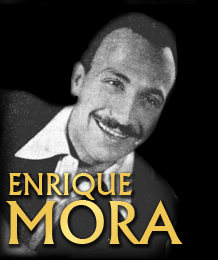
Enrique Mora Andrade
Mexican violinist and composer (Mazatlán, Sinaloa, 14 Jul. 1876 - 7 Jan.1913), known for his famous waltz "Alejandra"

Antonio Aguilar
José Pascual Antonio Aguilar Márquez Barraza (17 May 1919 – 19 June 2007) was a Mexican singer, actor, songwriter, equestrian, film producer, and screenwriter with a dominating career in music. He recorded over 150 albums, which sold 25 million copies, and acted in more than 120 films. He was given the honorific nickname "El Charro de México" (Mexico's Horseman) because he is credited with popularizing the Mexican equestrian sport la charrería to international audiences.
Aguilar began his career singing on the Mexican radio station XEW in 1950. That year, he signed a contract with the Mexican independent label Musart Records and became one of its best-selling artists. He made his acting debut with Pedro Infante in the drama Un rincón cerca del cielo(1952). After appearing in gentleman roles in several films, he achieved popularity as a film star with his performance as lawman Mauricio Rosales in a series of seven films in the mid-1950s. His success increased with his tours throughout Latin America and his studio albums, which included Mexican folk songs (rancheras) and ballads (corridos). In the 1960s, he focused on producing and starring in films set in the Mexican Revolution. In 1970, he won Latin ACE Award for Best Actor for his portrayal of Emiliano Zapata in the 1970 epic film of the same name. He also portrayed Pancho Villa twice in film. In 1997, Aguilar was awarded the Golden Ariel for his "invaluable contribution and spreading of Mexican cinema". To this day, he has been the only Hispanic artist to sell out the Madison Square Garden of New York City for six consecutive nights in 1997.
His second wife was famous singer and actress Flor Silvestre. They had two sons, Antonio Aguilar Hijo and Pepe Aguilar, who also became singers and actors. His family is known as "La Dinastía Aguilar" (The Aguilar Dynasty).

Quirino Mendoza y Cortés
Quirino Mendoza y Cortés (May 10, 1862 – 1957) was a Mexican composer of the famous traditional songs "Cielito Lindo" and "Jesusita en Chihuahua". He was born in Santiago Tulyehualco, Xochimilco, Mexico City in 1862
Cortés' father was an organist at a local parish, which originally inspired him to learn music. During his teens, he learned to play the piano, flute, violin, guitar, and the organ. He learned very quickly while taking lessons from his father, and quickly mastered these instruments in his teens. Also in his teens, he played songs at the local parish on the organ, like his father did. He then began to write his first song, 'My Blessed God.'